
Pcba printed circuit boards be recycled
The use of electronic devices has exploded in recent decades, leaving piles and truckloads of what is known as e-waste behind. Much of this is comprised of plastic components and something called PCBs, or printed circuit boards. Many people ask if PCBs can be recycled.
The answer is yes, but it involves a complex process that involves both human and mechanical labor. First, the board must be dismantled. This can be done by hand or using automated machines. Then, the individual components are removed from the board and sorted to separate metals from non-metals. This is a time-consuming process, as the components must be carefully removed without damaging them. Once the components are removed, the copper tracks on the board can be recycled as a metallic material.
Printed circuit boards are used in virtually all electronic equipment and can consist of single- or double-sided PCBs, multilayer PCBs, and rigid-flex PCBs. Single-sided printed circuit board pcba have a copper layer with solder holes that are etched through it to make conductive paths. Multilayer PCBs are used in more complex devices and can have up to 129 layers, with paths between the different layers being made through holes or vias. These paths can be through-hole, blind, or buried.
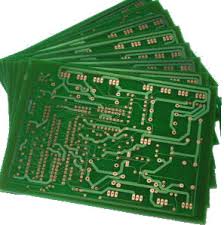
Can Pcba printed circuit boards be recycled?
Before a printed circuit board can be assembled, the copper tracks must be fabricated. This is a critical step in the process because it translates digital design files into the physical circuit boards that are used in the finished product. The fabrication process can be based on traditional photo tooling, laser direct imaging, or both. Then, the components must be procured and sourced based on the design specifications of the final product. The sourcing process can be based on performance specifications, cost, and lead times.
After the procurement process is complete, the PCBs must be inspected and tested before they are ready to be assembled into the final device. This can be done through visual inspection, automated optical inspection (AOI), and X-ray inspection. The resulting boards can be used in a wide variety of applications, including computers, mobile phones, consumer electronics, and industrial process control systems.
In addition to reducing the depletion of natural resources like copper, recycling circuit boards also helps to reduce solid waste, landfill, and land pollution. By designing the circuit boards to be more durable and easier to dismantle, it is possible to increase the number of cycles that the boards can go through before they have to be replaced.
A research team at the University of Washington has developed a new type of PCB that performs on par with traditional materials and can be recycled repeatedly without degradation or loss of functionality. The PCBs are made of a substance called a vitrimer, which is part of a cutting-edge class of sustainable polymers that was first developed in 2015. The team used a solvent to transform the vitrimer into a jelly-like substance that can be plucked from the solid components of the circuit boards and reused for another PCB.


+ There are no comments
Add yours