
Printed circuit board assembly services
Trace width is a critical factor in Printed Circuit Board (PCB) design that significantly influences the performance, reliability, and manufacturability of electronic devices. In PCB assembly services, trace width plays a crucial role in determining the electrical characteristics, signal integrity, and thermal management of the assembled PCBs.
One of the primary ways trace width affects printed circuit board assembly services is in signal integrity and electrical performance. The width of the traces on a PCB determines their impedance, which affects the speed and quality of signal transmission. Narrow traces may increase impedance, leading to signal degradation, reflections, and noise, which can ultimately impact the functionality and reliability of the electronic device. In contrast, wider traces can reduce impedance and improve signal integrity, ensuring robust communication between components.
Moreover, trace width influences the thermal management of assembled PCBs. Electrical currents flowing through traces generate heat, and the width of the traces determines their ability to dissipate this heat. Narrow traces may have higher resistance and lower thermal conductivity, leading to localized heating and potential thermal issues. In contrast, wider traces offer lower resistance and better thermal conductivity, allowing for more efficient heat dissipation and improved reliability of the assembled PCB.
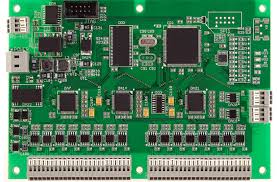
How does trace width affect Printed circuit board assembly services?
Furthermore, trace width affects the manufacturability of PCB assembly services, particularly during the soldering process. Narrow traces may be more challenging to solder accurately, leading to solder bridging, insufficient solder joints, or solder wicking issues. These soldering defects can compromise the electrical connection between components and result in reliability issues. In contrast, wider traces provide more surface area for soldering, facilitating easier and more reliable soldering during the assembly process.
Additionally, trace width considerations extend to the fabrication and assembly of PCBs. Fabricating narrow traces requires higher precision and tighter tolerances, which may increase manufacturing costs and complexity. Moreover, narrow traces may be more susceptible to etching inaccuracies or defects during the PCB manufacturing process, leading to yield issues and higher rates of scrap or rework. By contrast, wider traces offer greater margin for error and are generally easier to fabricate and assemble, contributing to smoother and more cost-effective PCB assembly services.
Furthermore, trace width optimization is essential for achieving specific design requirements and constraints. In high-speed digital circuits, for example, maintaining controlled impedance and signal integrity may necessitate wider traces to minimize signal distortion and transmission line effects. In contrast, in low-power or space-constrained applications, narrower traces may be preferred to conserve board space and reduce parasitic capacitance and resistance.
Moreover, the choice of trace width must consider the overall design goals, constraints, and trade-offs. Balancing factors such as signal integrity, thermal management, manufacturability, and cost is crucial in determining the optimal trace width for a given PCB design. Collaboration between designers, engineers, and PCB assembly service providers is essential to ensure that trace width considerations align with the desired performance, reliability, and manufacturability of the final electronic device.
In conclusion, trace width plays a critical role in Printed Circuit Board assembly services, influencing signal integrity, thermal management, manufacturability, and overall design optimization. By carefully selecting and optimizing trace widths, designers and PCB assembly service providers can ensure the performance, reliability, and manufacturability of electronic devices, ultimately meeting the needs and expectations of end-users in various applications and industries.


+ There are no comments
Add yours